Beekeeping
Bush Bees Home
Reasons for top entrances
How to make top entrances
Typical vs Alternatives
Top Entrance Frequently Asked Questions
Without a bottom entrance, don't they have trouble hauling out the dead bees and keeping the hive clean?
Do the returning foragers get irate when you're working the hive?
When removing supers don't they get confused?
Why do some people recommend not using them in town because of bees being confused when working the hive?
Can I reduce the entrance?
Click on Thumbnails for bigger pictures
Books for sale
Speaking
Be a patron on Locals
My YouTube Channel
Donations
Beekeeping Apprentice needed
Beekeeping Equipment
Beekeeping Carts
Beekeeping Things I Did Not Invent
Foundationless Beekeeping
Hardware Cloth Uses in Beekeeping
Hive Box Jig
Horizontal Hive Beekeeping
Lighter Beekeeping Equipment
Miscellaneous Beekeeping Equipment
Narrow Frame Beekeeping
Nucleus Hives
Observation Hives
Top Bar Hive Beekeeping
Top Entrance
Two Queen Hive
Wax Dipping Hives
Beekeeping Information
Beekeeping Acronym Glossary
Beekeeping Basics
Beekeeping Fallacies
Beekeeping Math
Beekeeping Locality
Beekeeping Systems
Beekeeping Terminology
Beginner Beekeepers
Classic Beekeeping Books
Colony Decisions
Contrary Opinions
Differences in Observations on Beekeeping
Experiment in Swarm Control
Feeding Bees
Frequently Asked Beekeeping Questions
Forums, how to get a good response
Harvesting Honey
Health Certificates since 2004
Inspections
Installing Packages
Laying Workers
Lazy Beekeeping
Mites that live on bees
More Than Just Bees
Moving Bees
Organic Beekeeping Meetings
Panacea
Presentations
Realistic Expectations in Beekeeping
Robbing
Smoke
Space Management
Splits
Spring Beekeeping Management
Swarm Control
Ten Commandments of Beekeeping
Timing
Too Many Beekeeping Options?
Unlimited Broodnest
Unnatural Things in Beekeeping
Videos of some of my presentations
Water
Wintering Bees
Bee Pests
CCD
Enemies of Beekeeping
Four Simple Steps to Healthier Bees
Mite Bombs
Natural Cell Size
Nosema
Rationalizations on small cell success
Varroa Treatments
Wax Moths
Why I Use No Treatments of Any Kind
Queens
A Few Good Queens
Feral Bees
Genetic Diversity
Quality of Emergency Queens
Queen Flying Off
Queen Rearing
Queen Spotting
Queens For Sale
Races of Bees
Requeening a hot hive
Whole bee concept
Philosophy
Beekeeping Philosophy
Belief in Beekeeping
The Hardest Thing To Do In Beekeeping
How bees change your life
Learning
Native American Honey Bees
Scientific Studies
Other Links
Beesource Beekeeping Forum
Beesource Beekeeping Home
Beemaster Beekeeping Home Page
Dee Lusby on Small Cell Beekeeping
Bee Unto Others
Dave Cushman
Resistant Bees
Beekeeper Linda
Beekeeping like a girl
Bella Donna, Apitherapist
english, español, français, deutsche, português, русском, română, polsku, беларускай,
Top Entrances

Reasons for top entrances
You can keep bees fine without these, but they do eliminate the following problems: mice, skunks, opossums, dead bees blocking the exit in winter, condensation on the lid in winter, snow blocking the exit in winter, grass blocking the exit the rest of the year. It also allows you to buy inexpensive and very nice Sundance II pollen traps.
"I had a neighbor who used the common box hive; he had a two inch hole in the top which he left open all winter; the hives setting on top of hemlock stumps without any protection, summer or winter, except something to keep the rain out and snow from beating into the top of the hive. he plastered up tight all around the bottom of the hive for winter. his bees wintered well, and would every season swarm from two to three weeks earlier than mine; scarcely any of them would come out on the snow until the weather was warm enough for them to get back into the hive.
"Since then I have observed that whenever I have found a swarm in the woods where the hollow was below the entrance, the comb was always bright and clean, and the bees were always in the best condition; no dead bees in the bottom of the log; and on the contrary when I have found a tree where the entrance was below the hollow, there was always more or less mouldy comb, dead bees.
"Again if you see a box hive with a crack in it from top to bottom large enough to put your fingers in, the bees are all right in nine cases out of ten. The conclusion I have come to is this, that with upward ventilation without any current of air from the bottom of the hive, your bees will winter well without any cobs."--Elishia Gallup, The American Bee Journal 1867, Volume 3, Number 8 pg 153
How to make top entrances
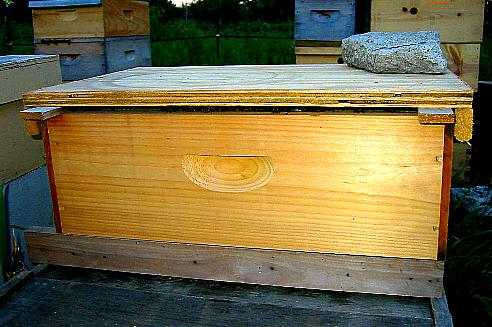
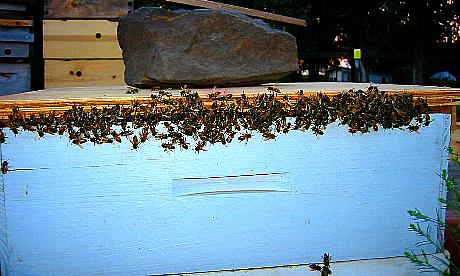
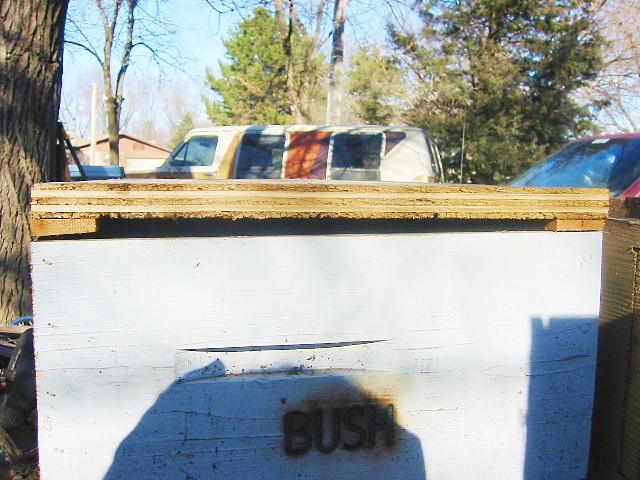
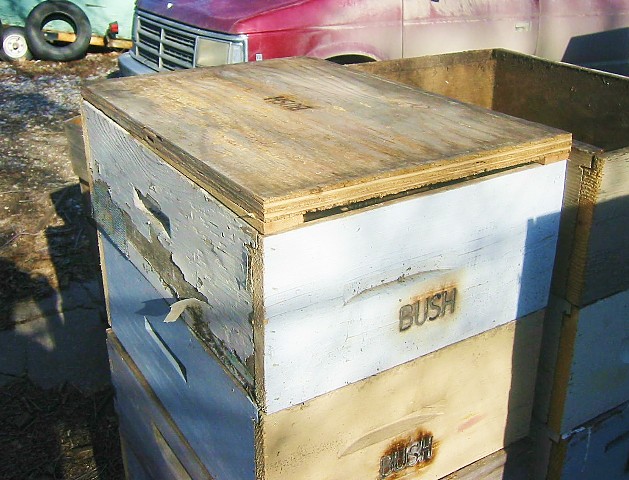
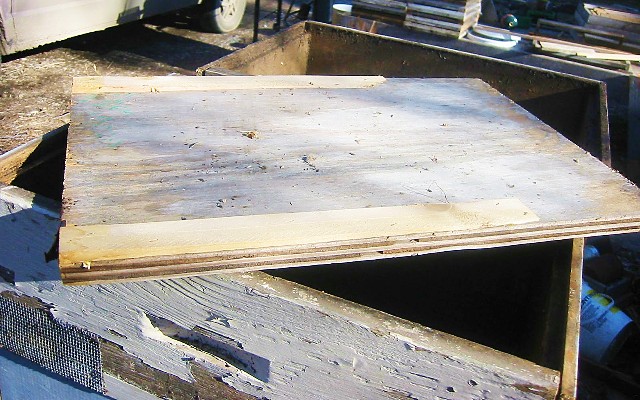
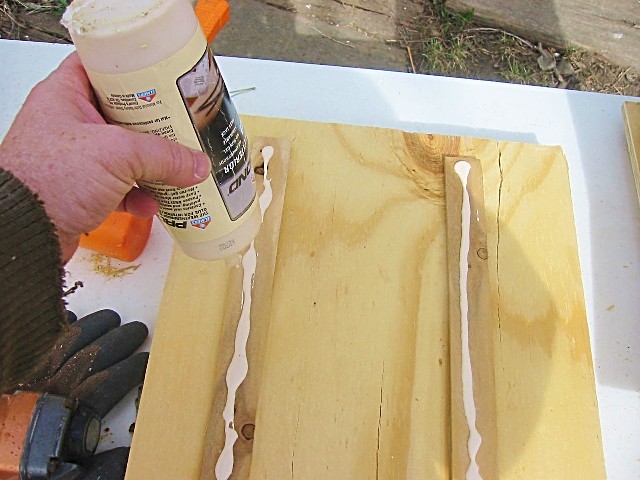
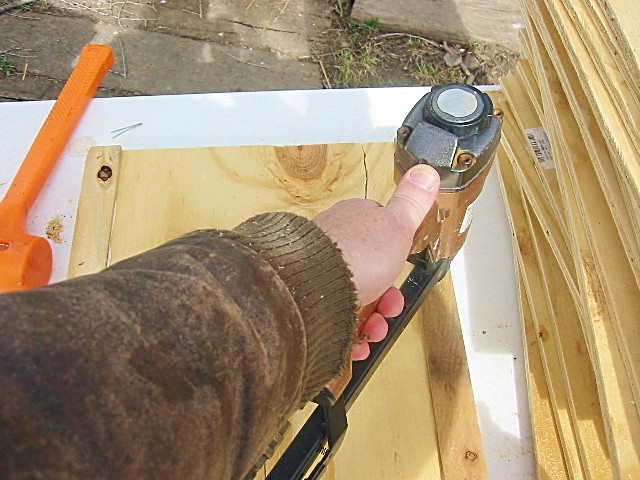
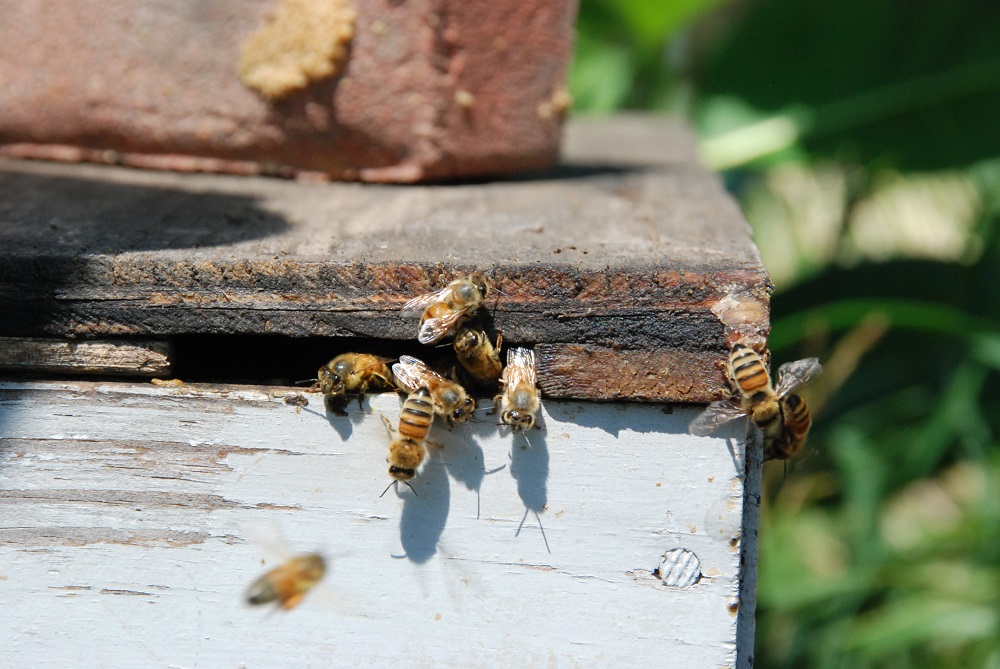
The first two pictures are regular migratory covers with tapered shims to make top entrances with the opening the long way. My current ones are the next three pictures. These are 3/4" plywood cut to the size of the box (no overhang or cleats) with shims to make the opening the short way. I just started making them out of 1/2" plywood. The next two pictures are me making the top entrances. The idea of using shims was presented to me by Lloyd Spears who says he got it from a man named Ludewig
Top Entrance Frequently Asked Questions:
Question:
Without a bottom entrance, don't they have trouble hauling out the dead bees and keeping the hive clean?
Answer:
In my observation, no more than with a bottom entrance. Either way dead bees accumulate over winter. Either way they accumulate some in the fall. Either way they usually keep it pretty clean in the middle of the year. I've watched a house keeping bee in my observation hive (which has a bottom entrance), haul dead bees all over the hive from top to bottom before finally finding the entrance at the bottom. I don't think it matters at all.
Question:
Do the returning foragers get irate when you're working the hive?
Answer:
I haven't noticed any difference. Whether a top entrance or a bottom entrance, while you're working the hive you're disrupting things just by standing there. You always, in both cases, have confused bees circling and with both bottom and top entrances you have bees who just go back into the hive while you're working. With the top entrance they just go in the top.
Question:
When removing supers don't they get confused?
Answer:
The most confusion is when you remove them from only one and it's right next to a similar height hive. Then they do get confused about which hive is theirs. But I think they do the same with a bottom entrance for the same reason except you don't notice. They use the height of the hive as one of their landmarks so they continue to fly into the tall white hive nearest where they remember it instead of the short one next to it. In a day things go back to normal.
Question:
Why do some people recommend not using them in town because of bees being confused when working the hive?
Answer:
Similar to above answer. In my experience, no. Any hive being opened causes confusion for the returning foragers because the height of the hive is often changed because of removing boxes, and the beekeeper's presence changes the landmarks. I see no increase in the confusion of a top entrance only hive to a bottom entrance only hive. In my opinion, advice that top entrances should not be used in Urban areas are misplaced but seem to be often repeated by those who have no experience with top entrances. Wintering will be much improved by a top entrance and it prevents issues such as Chalkbrood and overheating as well. These advantages should not be sacrificed merely because of a commonly held belief about hive disruption that is so often repeated.
Question:
Can I reduce the entrance?
Answer:
Of course you can reduce it several ways. My method is to cut a piece of screen molding (3/4" x 1/4" molding) to about an inch and a half short of the width of the opening and nail it to the top with a nail in the center so you can pivot it to open it.
Hope you enjoyed the pictures,
Michael Bush
Copyright 2006-2009 by Michael Bush